
Professional Geosynthetics Testing Solutions
Precision Testing for Geomembranes & Geotextiles & Geosynthetic Materials
Delivering advanced physical performance testing solutions for the geosynthetics industry to ensure every material meets the highest standards of strength, durability, and reliability.
From tensile strength to puncture resistance, from tear propagation to thickness uniformity — we safeguard the quality of geosynthetic materials at every stage.
- ISO Standard
- ASTM Standard
- 500+ Partner Trust
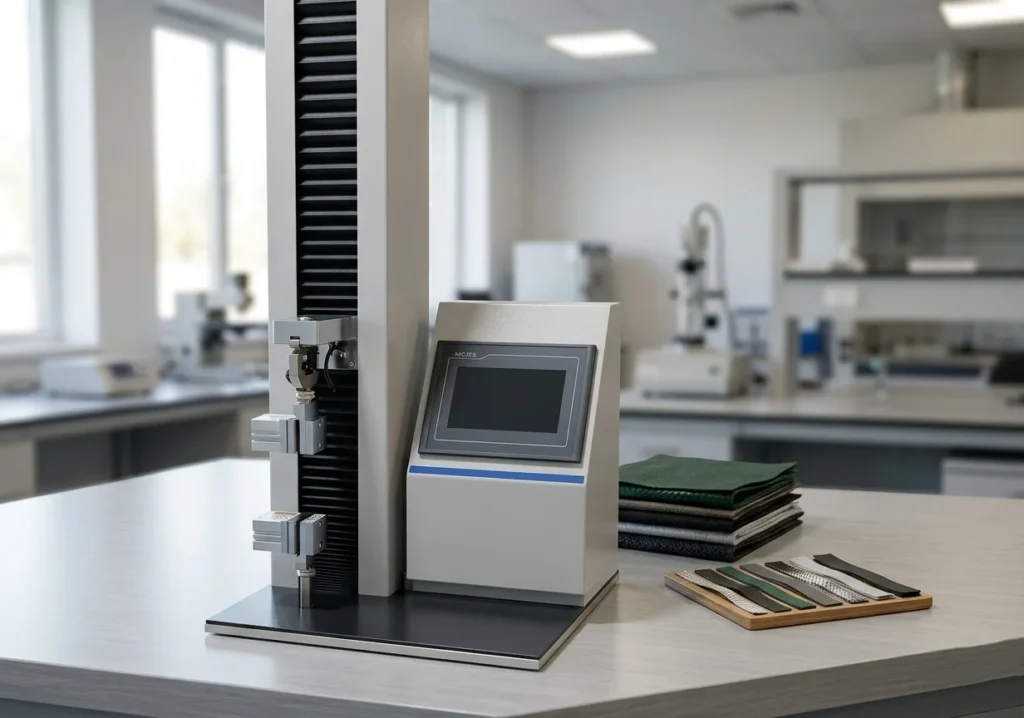
Comprehensive Geosynthetics Testing Solutions
From tensile strength and puncture resistance to thickness measurement and seam performance, we provide a complete range of testing instruments to meet all your geosynthetic material testing requirements.
Geomembrane Peel Test
The geomembrane peel test evaluates the adhesion strength between layers or seams by applying a controlled 180° separation force. It provides a quantitative measure of bonding integrity, helping ensure product reliability in critical containment applications.
Seam Strength Test
The geomembrane seam strength test evaluates seam integrity using peel and shear methods defined in ASTM D6392. Peel testing measures resistance to separation, while shear testing assesses load-bearing performance parallel to the seam.
Grab Tensile Test
The puncture resistance test evaluates how geosynthetic materials such as geotextiles and geomembranes resist penetration from concentrated loads or sharp objects. Standards including ASTM D4833, ASTM D5494, ASTM D6241, and ISO 12236 define procedures for measuring index puncture resistance, pyramidal puncture resistance, and static puncture strength.
Strip Tensile Test
The strip tensile test evaluates tensile strength and elongation of reinforced geomembranes by applying controlled tensile force to narrow specimens. Following ASTM D7003, the method measures peak load, elongation, and failure characteristics along reinforcement directions.
Wide Width Tensile Test
The wide width tensile test provides an accurate method for evaluating tensile strength and elongation of geotextiles by minimizing edge effects and simulating real-world conditions. Based on ISO 10319 and ASTM D4595, it measures force–elongation behavior, stiffness, and toughness using full-width specimens.
Tongue Tear Test
The tongue tear test evaluates the tearing strength of internally reinforced geomembranes by measuring the maximum force required to propagate a tear from a pre-cut slit. Conducted according to ASTM D5884, the method uses a tensile testing machine to pull two “tongues” of a specimen apart at a controlled speed while recording the peak load.
Trapezoid Tear Strength Test
The trapezoid tear strength test evaluates the force required to propagate a tear across geotextile materials. Based on ASTM D4533, the trapezoid tear method clamps a trapezoid-shaped specimen in a tensile tester and measures the maximum tearing force as the grips separate.
Puncture Resistance Test
The puncture resistance test evaluates how geosynthetic materials such as geotextiles and geomembranes resist penetration from concentrated loads or sharp objects. Standards including ASTM D4833, ASTM D5494, ASTM D6241, and ISO 12236 define procedures for measuring index puncture resistance, pyramidal puncture resistance, and static puncture strength.
Thickness Measurement
Thickness measurement of geosynthetics is carried out by applying defined pressure and measuring the distance between contact surfaces, with results highly dependent on load conditions and material structure.
Our Geosynthetics Testing Instruments
Universal Testing Machine
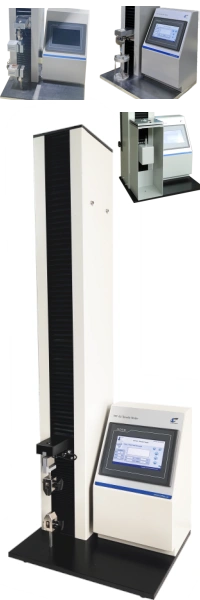
Engineered for precision-controlled tensile loading, compatible with a wide range of geosynthetic mechanical test methods.
Applicable Test Methods
- Strip Tensile Test
- Wide Width Tensile Test
- Grab Tensile Test
- Seam Strength Test
- Peel / Delamination Test
- Tongue Tear Test
- Trapezoid Tear Test
- Graves Tear Test
- Puncture Resistance Test
Thickness Gauge

Designed for accurate thickness measurement of geotextiles, geomembranes, drainage composites, geonets, and multilayer geosynthetic products.
Applicable Test Methods
- Thickness Measurement of Geotextiles
- Thickness Measurement of Geomembranes
- Thickness Under Specified Pressure
- Thickness Recovery Evaluation
- Compressive Thickness Measurement
Focused on Innovation in Geosynthetics Testing Technology
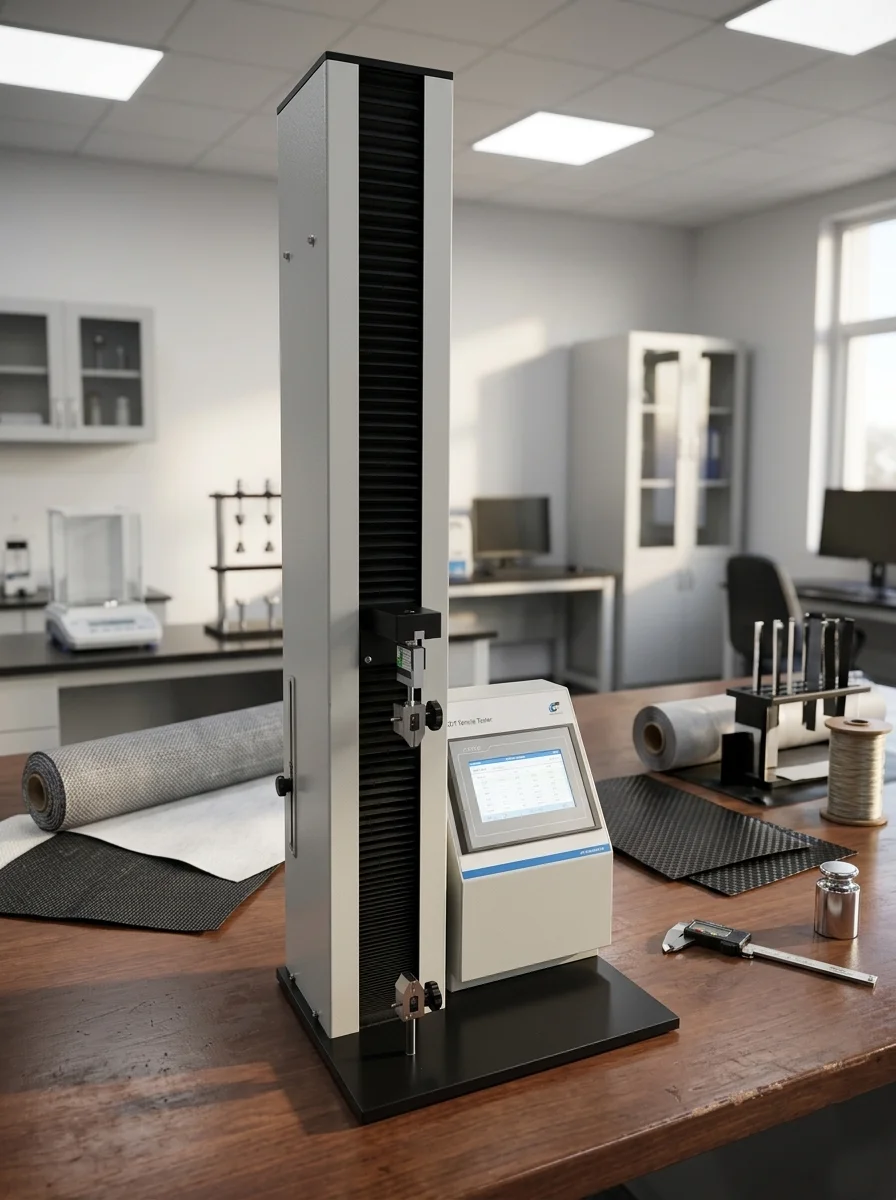
Founded in 2004, Cell Instruments is a specialized manufacturer of mechanical and physical testing instruments for geosynthetic materials.
Our solutions serve:
- Geomembrane manufacturers
- Geotextile and nonwoven fabric producers
- Geogrid and geocell suppliers
- Civil engineering laboratories
- Construction material testing laboratories
- Water conservancy and environmental engineering companies
- University and research institutions
We provide:
- Customized fixtures and testing systems
- Automated testing solutions
- Integrated laboratory software
- Complete installation, training, and after-sales support
From product development and certification testing to production quality control, we deliver complete value throughout your testing process.
Professional Tear Testing Solutions for Diverse Industries
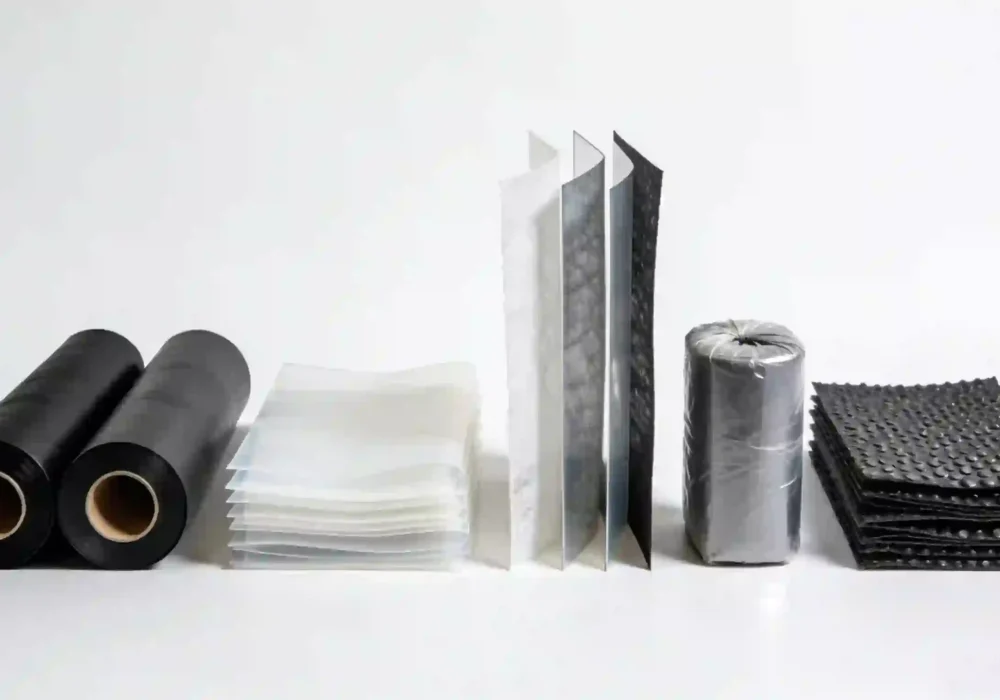
Comprehensive testing solutions for smooth geomembranes, textured geomembranes, reinforced geomembranes, and multilayer barrier materials used in landfill, mining, water containment, and environmental protection applications.
Applicable Instruments
Common Test Items
Solution Advantages
- Ensure puncture and tear resistance
- Verify seam welding quality
- Improve long-term containment reliability
- Reduce leakage and environmental risks
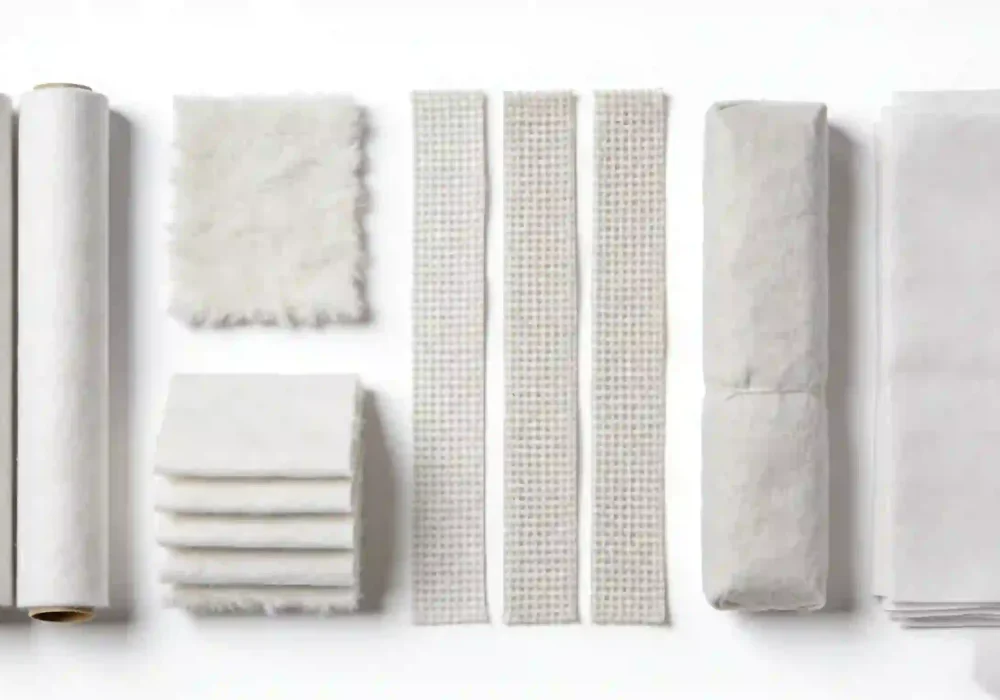
Testing solutions for woven geotextiles, nonwoven geotextiles, needle-punched fabrics, and coated geotextiles used in filtration, separation, reinforcement, and drainage applications.
Applicable Instruments
Common Test Items
Solution Advantages
- Improve reinforcement performance
- Verify filtration layer durability
- Ensure puncture resistance during installation
- Support long-term field performance

Testing solutions for drainage composites, geonet composites, geocomposites, bentonite liners, and multilayer engineered materials.
Applicable Instruments
Common Test Items
Solution Advantages
- Verify bonding strength between layers
- Improve drainage and separation performance
- Ensure long-term structural integrity
- Support demanding environmental applications
Comprehensive Geosynthetics Testing Standard
ASTM D1709
Packaging films, geomembranes, and flexible polymer materials are frequently exposed to impact forces during manufacturing, transportation, installation, and end-use service. A Falling Dart Impact Tester is one of the most widely used instruments for evaluating the ability of these materials to withstand sudden impact without failure. By quantifying impact resistance, manufacturers can optimize material formulations, improve product durability, and ensure compliance with industry standards. Whether performing routine quality control on packaging films or conducting a dart impact test for geomembranes, impact resistance data provides valuable insight into material toughness and puncture resistance. Why Impact Resistance Testing Matters Flexible materials often experience accidental impacts that can lead to punctures, tears, or catastrophic failure. Traditional tensile testing evaluates strength under gradual loading, but many real-world failures occur under dynamic impact conditions. Impact resistance testing helps manufacturers: Industries including packaging, agriculture, construction, medical devices, and environmental engineering rely on impact testing data to validate product performance. What Is a Falling Dart Impact Tester? A Falling Dart Impact Tester is a laboratory instrument designed to determine the impact resistance of plastic films, sheets, and
ASTM D5994
ASTM D5994 provides a standardized method for measuring the core thickness of textured geomembranes using a dead-weight thickness gauge with defined tip geometry and loading force. The method focuses on valley-to-valley thickness rather than surface texture height.
ASTM D5884
ASTM D5884 determines the tearing strength of internally reinforced geomembranes using the tongue tear method. The test measures the peak force required to propagate a tear through a pre-cut specimen in both machine and cross-machine directions.
ASTM D5494
ASTM D5494 defines a standardized method to determine the pyramid puncture resistance of unprotected and protected geomembranes. It evaluates maximum load and elongation at rupture using a pyramid-shaped piston on either water or aluminum backing.
ASTM D5199
ASTM D5199 defines a standardized method for measuring the nominal thickness of geosynthetics under controlled pressure and time conditions. The method applies to geotextiles, smooth geomembranes, geonets, and drainage composites.
ASTM D4833
ASTM D4833 evaluates the puncture resistance of geomembranes and related materials by measuring the maximum force required for a steel rod to rupture a clamped specimen. The method uses a ring clamp fixture, an 8 mm puncture rod, and a test speed of 300 mm/min.
ASTM D4632
ASTM D4632 evaluates the grab breaking load and elongation of geotextiles by gripping only part of the specimen width during tensile loading. The method helps laboratories and manufacturers assess effective fabric strength, compare products, control production quality, and verify shipment acceptance.
ASTM D4533
ASTM D4533 measures the force required to continue a tear in woven and nonwoven geotextiles. The method uses a trapezoidal specimen with a pre-cut section and records the maximum tear force during testing.
ISO 10319
ISO 10319 defines a wide-width tensile test method for evaluating the tensile properties of geosynthetics such as geotextiles, geogrids, geocomposites, geomats, and geonets. The method measures tensile strength, elongation, tensile strain at maximum force, and secant stiffness.