
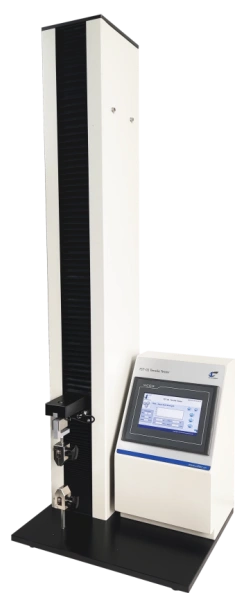
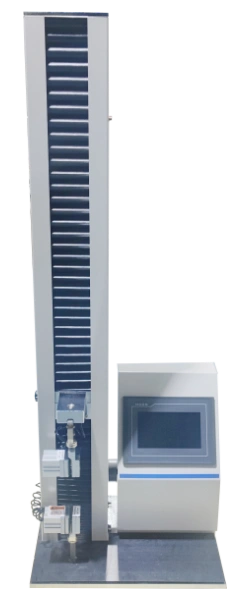
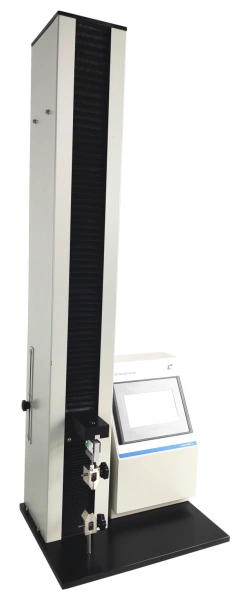
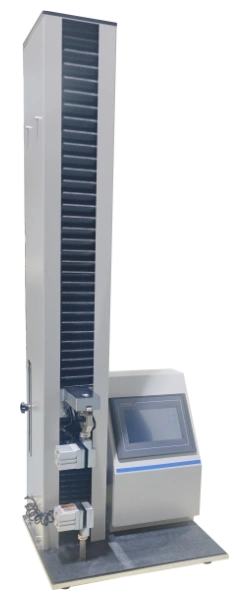
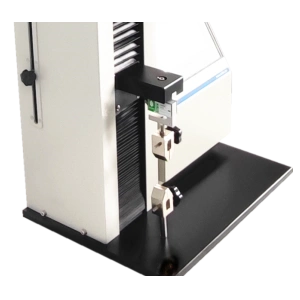
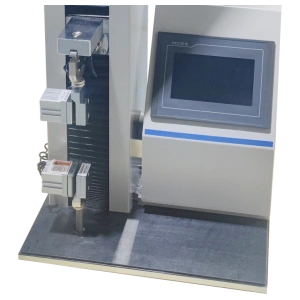
Tear tester plays a critical role in evaluating how materials behave when subjected to a propagating crack. In packaging, medical devices, textiles, and industrial films, tear performance directly affects product integrity, consumer safety, and regulatory compliance. Cell Instruments designs advanced tear testing solutions that combine mechanical precision, digital control, and international standard compatibility to deliver reliable tear strength data for quality control laboratories and R&D departments.
Unlike simple tensile measurement, tear analysis focuses on crack initiation and propagation, providing deeper insight into material durability. Whether you need to evaluate flexible packaging film, coated paperboard, rubber sheets, or woven fabric, a properly configured tear tester ensures repeatable and standards-compliant results.
Tear Tester for Reliable Material Evaluation
A tear tester quantifies the force required to continue tearing a pre-cut specimen under controlled conditions. Engineers often use this data to predict packaging failure, seal rupture, or fabric damage during handling.
Cell Instruments integrates:
- PLC-driven control with 7″ HMI touchscreen
- Precision ball lead screw for stable displacement
- Adjustable speed from 1–500 mm/min
- Accuracy up to 0.5% full scale
- Displacement accuracy of ±0.01 mm
- Multiple load cell options (50 N to 1 kN)
These features allow operators to configure the tear tester precisely according to material type and applicable standard.
Tearing Tester for Graves Tear Test
The graves tear test, defined in ASTM D624, evaluates the tear resistance of vulcanized rubber and elastomers using die-cut specimens. A tearing tester configured for this method applies tensile force to a nicked specimen, measuring peak force during tear propagation.
This method helps manufacturers of seals, gaskets, and flexible components determine resistance to crack growth under stress. Accurate grip alignment and speed control significantly influence test repeatability.
Tearing Tester for Trapezoidal Tear Test
The trapezoidal tear test, referenced in ASTM D4533, measures tear resistance of fabrics and nonwovens. The specimen geometry creates a stress concentration that initiates controlled tearing.
Quality control teams in textile and geotextile industries rely on this method to compare fabric durability. A properly calibrated tear tester ensures stable loading rate and consistent tear path.
Tongue Tear Test According to ISO and ASTM
The tongue tear test, covered in ISO 13937-2 and ASTM D2261, measures the force required to propagate a cut in textile materials.
This method simulates real-life tearing conditions in garments, industrial fabrics, and airbags. Operators prepare a rectangular specimen with a central cut, clamp both legs, and apply tensile force until the tear advances. The tear tester records peak and average force values for reporting.
Trouser Tear Test and Single Tear Test for Plastic Film
The trouser tear test and single tear test evaluate flexible plastic materials and thin sheets. Standards such as ISO 6383-1 and ASTM D1938 define specimen geometry and testing speed.
For flexible packaging manufacturers, tear strength of plastic film directly influences openability and mechanical durability. Balanced tear resistance ensures that consumers can open packages easily without accidental rupture during transport.
Tear Resistance Test of Paper and Board
The tear resistance test of paper determines how paperboard, corrugated materials, and specialty papers resist tear propagation. Although Elmendorf pendulum methods are common, tensile-type tear tester configurations support specialized methods and research applications.
Standards such as ASTM D1004 and ASTM D5587 further extend applicability to films and coated substrates.
For packaging engineers, understanding tear performance helps optimize fiber orientation, coating formulation, and laminate structure.
Tear Test of Fabric and Coated Materials
The tear test of fabric also applies to coated textiles and industrial composites under ASTM D751. These materials often serve in inflatable structures, tarpaulins, and protective covers. Tear resistance directly affects service life and safety performance.
A versatile tear tester with interchangeable grips supports rapid fixture changeover between tensile, peel, and tear modes, improving laboratory efficiency.
How a Tear Tester Works
A typical testing process includes:
- Preparing specimens according to the selected standard
- Introducing a defined pre-cut or notch
- Clamping the specimen securely
- Setting test speed and load cell parameters
- Initiating the test via touchscreen interface
- Recording peak force, average force, and tear propagation behavior
The system automatically returns to the start position after completion. Operators can export results via RS-232 or optional microprinter for documentation.
Result outputs typically include:
- Maximum tear force (N)
- Tear propagation force
- Elongation at tear
- Load-displacement curve
These metrics support product comparison, material development, and compliance verification.
Why Choose Cell Instruments Tear Tester
Cell Instruments combines mechanical stability with digital intelligence:
- Industrial-grade frame for long-term reliability
- Built-in test programs for break, elongation, peel, and tear
- Customizable stroke up to 800 mm
- Multi-industry adaptability
Our engineering team also provides customized fixtures and automation upgrades tailored to specialized tear test configurations.